The Great Sealer Debate: Emulsion vs. Oil-Based
When it comes to protecting asphalt in Colorado's high-altitude environment, the type of sealer you choose matters more than most property owners realize. Two main contenders dominate the market: water-based asphalt emulsion with hydrocarbon polymers and traditional oil-based sealers. While both can look good initially, their performance in freeze-thaw cycles tells a very different story.
What's the Difference?
Asphalt Emulsion Sealers (Water-Based with Hydrocarbon Polymers):
- Water-based carrier with suspended asphalt cement and polymer additives
- Cures through water evaporation and oxidation
- Creates a flexible, elastic bond
- Ideal for cold climates
Oil-Based Sealers:
- Petroleum-based carrier with asphalt cement
- Cures slowly through oxidation only
- Creates a more brittle surface
- Better suited for warm, stable climates
The Curing Problem: Why Oil-Based Fails
Here's where things get critical for Summit County properties. Oil-based sealers require warm, stable conditions to cure properly. In the Colorado mountains, that's rarely what we get.
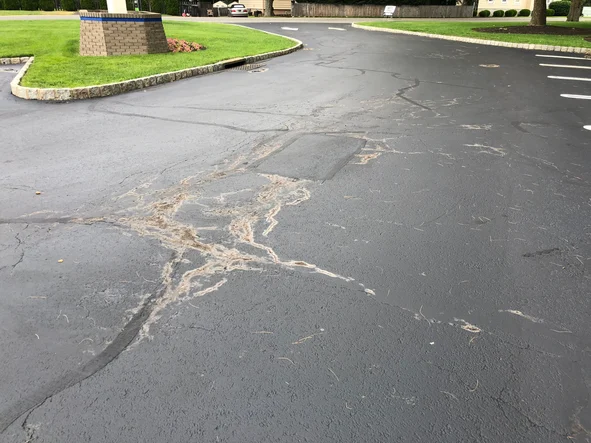
When you apply an oil-based sealer to a cool asphalt surface (especially in spring or fall), the sealer sits on top of the pavement without fully bonding. It continues to soften and break down throughout the season. By the time winter arrives and temperatures plummet below freezing:
- The sealer hasn't fully hardened - it remains tacky and weak
- Water penetrates the soft coating - ice forms beneath the sealer layer
- Freeze-thaw expansion separates the seal - chunks of sealer peel away, exposing raw asphalt
- Water infiltration accelerates pavement failure - the base layer deteriorates
Why Emulsion Sealers Win in Mountain Conditions
Water-based emulsion sealers cure differently—and much faster:
Faster Curing: Water evaporates quickly, even in cool conditions. The emulsion begins bonding to the asphalt within hours, not weeks.
Superior Flexibility: Hydrocarbon polymers embedded in the emulsion give the cured sealer elasticity. When temperatures swing from 60°F to 20°F, the sealer flexes with the pavement instead of cracking.
Reliable in Cold: Because water-based emulsions cure by evaporation + minimal oxidation (not heavy oxidation), they work in our climate. Application temperatures can be lower, and curing happens faster.
Better Adhesion: Emulsion sealers bond more securely to the asphalt surface, creating a true waterproof barrier rather than sitting on top like oil-based products often do.
Real-World Comparison
Imagine two identical driveways in Breckenridge sealed in April:
Driveway A (Oil-Based Sealer):
- Looks great for 2 weeks
- Still soft 6 weeks later (despite sunny days)
- First freeze-thaw cycle in May → sealer starts peeling
- By October, seal is 60% compromised
- Water damage visible by next spring
Driveway B (Emulsion + Polymer):
- Fully cured in 48 hours
- Flexes safely through spring/fall temperature swings
- First freeze-thaw cycle → sealer holds firm
- After one season, seal remains 95% intact
- Asphalt protected through winter and beyond
What About Cost?
Yes, quality asphalt emulsion sealers cost slightly more per gallon. But the math is simple:
- Oil-based sealer: $40/100 sq ft, fails after 1-2 seasons = $20-40/sq ft annually
- Emulsion sealer: $55/100 sq ft, lasts 3-4 seasons = $14-18/sq ft annually
You save money in the long run by using the right product for your climate.
The Bottom Line
Don't let marketing or lowest-price contractors steer you toward oil-based sealers. In Summit County, water-based asphalt emulsion with hydrocarbon polymers is the only sensible choice. It cures faster, bonds better, flexes in freeze-thaw cycles, and delivers genuine pavement protection.
Elevation Seal & Fill uses premium emulsion sealers specifically formulated for high-altitude mountain conditions. We don't apply anything we wouldn't put on our own driveways—and neither should you.
Ready to seal your driveway the right way? Request a free quote today.