Cold Pour vs Hot Rubber Crack Filling: Why Method Matters
When it comes to filling cracks in mountain asphalt, there's a massive difference between cold pour products and hot rubber application. One works. One fails repeatedly. Understanding the difference will save you thousands in pavement replacement costs.
What Is Cold Pour Crack Fill?
Cold pour sealants are liquid products you can apply at ambient temperature without specialized equipment. Popular hardware store varieties include:
- Acrylic latex crack fillers
- Polyurethane-based sealants
- Asphalt emulsion in tubes or bottles
The appeal: They're cheap, you can buy them anywhere, and application requires minimal skill. Just squeeze, brush, or pour.
The problem: They fail spectacularly in Colorado mountains.
Why Cold Pour Fails in Summit County
1. Poor Adhesion in Freeze-Thaw Cycles
Cold pour products rely on surface-level bonding. When water enters the crack and freezes, it expands with 30,000 PSI of force. This expansion pushes the cold pour sealant out of the crack entirely—a process called "pop-out."
You'll notice this in spring: black sealant sitting on top of the asphalt, completely separated from the crack. The water inside continues freezing and expanding, widening the crack further.
Result: Your crack is now wider than before, and you've wasted money on a temporary bandage.
2. UV Degradation Without Heat Bonding
Cold pour products cure by evaporation or chemical reaction, but they don't achieve molecular bonding with the asphalt substrate. Exposed to Summit County's intense high-altitude UV, these sealants become brittle and lose flexibility within 12-18 months.
Once brittle, they can't flex with the asphalt as temperatures cycle, accelerating failure.
3. Water Intrusion
Cold pour sealants don't create a complete moisture barrier. Water finds pathways along the edges and works deeper into the crack. This accelerates base layer deterioration—the structural foundation of your pavement.
What Is Hot Rubber Crack Filling?
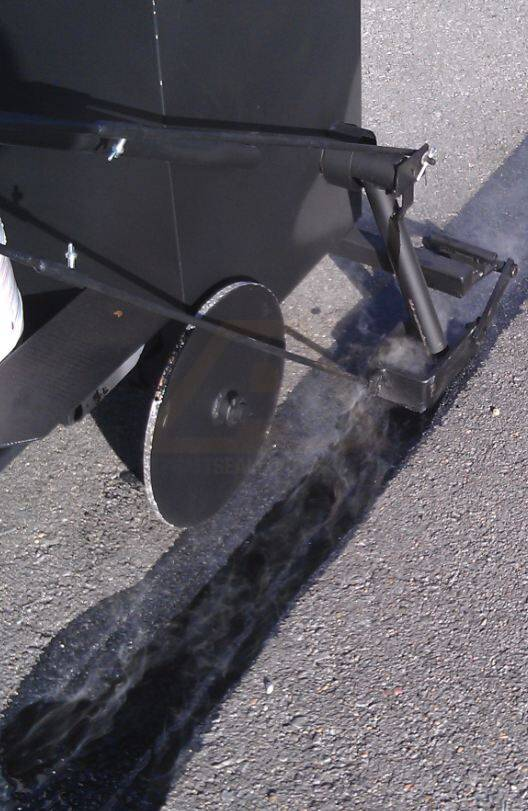
Hot rubber (or hot-applied thermoplastic) crack filling uses industrial melting kettles to heat rubber-based sealant to 350°F. The molten rubber is poured directly into the crack, where it bonds at a molecular level with the asphalt.
The application:
- Specialized equipment required
- Professional-grade material
- Applied at extreme temperature
- Cures to rock-hard durability
Why Hot Rubber Works in the Mountains
1. Molecular Bonding at 350°F
Heat melts the asphalt surface slightly, allowing the hot rubber to flow into every cavity and crevice. As it cools, the rubber bonds molecularly with the asphalt—not sitting on top, but integrated into the surface.
This isn't a surface seal. It's structural integration.
2. Extreme Cold Flexibility
Hot rubber crack fill remains flexible to -20°F and below. When water freezes inside a sealed crack, the flexible rubber expands and contracts WITH the ice—no pop-out, no separation.
Result: The seal holds intact through 100+ freeze-thaw cycles per year.
3. Superior Moisture Barrier
The molecular bonding and depth of penetration create a complete moisture barrier. Water can't seep around the edges because there are no edges—it's a continuous, bonded seal.
Your base layer stays dry. Your pavement foundation stays intact.
4. UV Resistance Through Heat Treatment
The application temperature triggers chemical changes in the rubber, creating superior UV resistance. Combined with the sealcoat applied afterward, hot rubber filler stays protected and flexible for years.
The Financial Reality
Cold Pour Approach:
- Year 1: Buy $50 cold pour product, DIY or hire low-cost contractor
- Year 2-3: Repeat because it failed
- Year 4-5: Cracks are now wider, base layer damaged
- Year 6+: Pothole formation, pavement failure accelerates
- Total outcome: More frequent applications, faster pavement failure, eventual replacement ($10,000+)
Hot Rubber Approach:
- One professional application (higher upfront cost)
- Performance depends on asphalt base condition, traffic load, and maintenance
- Crack sealed at the source, base layer protected
- Pavement lifespan extended significantly when properly maintained
- Total outcome: Long-term cost savings, extended pavement life
Real-World Mountain Performance
In Summit County's 100+ freeze-thaw cycles annually, cold pour sealants typically fail within 18 months. Hot rubber crack fill performs significantly better, with longevity depending on factors including asphalt base age, traffic patterns, UV exposure, and whether you maintain the sealcoat.
Well-maintained hot rubber typically outperforms cold pour by several years, but specific durability varies by property conditions.
Why the difference? Cold pour isn't engineered for extreme temperature cycling. Hot rubber is specifically formulated to flex, bond, and endure the conditions we work in every day.
The Bottom Line
If you see contractors offering $30-50 crack filling or selling you DIY cold pour products, they're setting your pavement up for failure. It might feel cheaper today, but it accelerates the timeline to expensive repairs.
Hot rubber crack filling is the only method that works in the mountains. It's also the only ethical recommendation for Summit County properties.
Protect your investment. Use hot rubber crack filling, followed by premium sealcoat, and maintain it regularly. Proper maintenance extends your pavement life significantly.
Ready to Protect Your Asphalt?
Elevation Seal & Fill uses industrial hot rubber crack filling on every project. We know the conditions, we have the equipment, and we stand behind our work.
Get a free assessment and quote today.