The Freeze-Thaw Assault: Why Mountain Asphalt Fails Faster
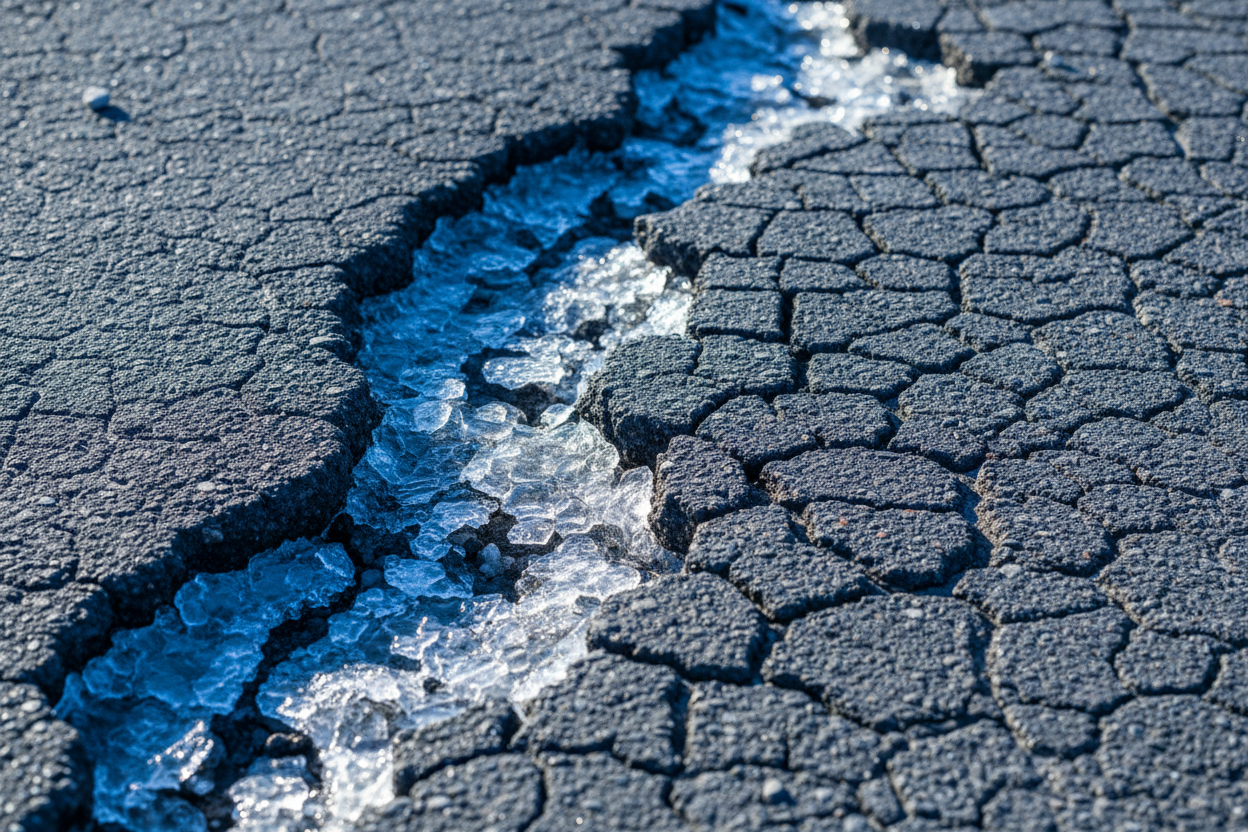
At 9,000+ feet elevation, your asphalt faces a unique enemy: the freeze-thaw cycle. While driveways in Denver experience 20-30 freeze-thaw cycles annually, properties in Summit County endure 100 or more.
That's not just a difference in numbers—it's an exponential difference in destructive force.
What is a Freeze-Thaw Cycle?
A freeze-thaw cycle occurs when:
- Moisture enters the asphalt (through cracks, pores, or worn seals)
- Temperature drops below 32°F → water freezes
- Ice expands with 30,000+ PSI of force → pushing pavement layers apart
- Temperature rises above 32°F → ice melts
- Water drains deeper → cycle repeats
One cycle is harmless. But 100 per year? That's cumulative destruction.
The Progression of Damage
Year 1: Hairline cracks appear (often invisible to the eye). Water begins infiltrating the base layer.
Year 2: Cracks widen. Small areas of pavement become hollow (base erosion). First signs of crumbling edges.
Year 3: Potholes form. Base failure accelerates. Structural integrity compromised.
Year 4+: Major repairs required. Replacement becomes economically unavoidable.
Why 100+ Cycles is Devastating
The key difference between Denver (30 cycles) and Summit County (100+ cycles) is intensity and frequency.
Each freeze-thaw cycle:
- Stresses the asphalt binder
- Widens existing cracks by 0.1-0.5mm
- Pushes water deeper into the base
- Erodes the structural foundation
Run this 100 times per season, and you see why mountain pavement fails so fast.
How Crack Filling & Sealcoating Prevent Disaster
The solution is simple: Stop water from entering cracks and the pavement surface.
Hot Rubber Crack Filling: Seals cracks at 350°F, preventing water infiltration. Without it, every crack becomes a highway for water to reach the base layer.
Sealcoating: Creates a barrier on the asphalt surface, blocking moisture and UV. Extends pavement life by 2-3x by reducing the frequency of damaging cycles.
Together: Hot rubber + sealcoating is preventive maintenance. Skip them, and you're accepting premature replacement costs.
The Math
- Preventive maintenance: $800-1500 every 2-3 years
- Pavement replacement: $5000-10000+ every 8-10 years without protection
Prevention always wins.
When to Act
If your asphalt shows any of these signs, you're in the danger zone:
- Visible cracks (hairline to quarter-inch)
- Grey or faded color (oxidation)
- Soft spots or spongy areas
- Water pooling on the surface
- Potholes or crumbling edges
Don't wait for the next freeze-thaw season. Call now to protect your investment.